Cheesecake has a reputation problem if you’re tracking macros. It’s dessert code for “see you next week, calorie budget.” The fix isn’t a joyless protein bar, it’s learning how to push the texture and flavor of a classic cheesecake out of cottage cheese, eggs, and a few strategic ingredients. Done right, this version lands with a creamy interior, a clean slice, and macro numbers that make sense for a weeknight or a post-lift sweet tooth. You’ll trade some of the dense richness for lightness, but you won’t feel like you’re eating a compromise.
This recipe has been through enough test bakes to find the line between high-protein and enjoyable. I’ll give you the baseline, the dials you can turn based on your goals, and the small technique details that decide whether you get silk or rubber.
What you get, macros and all
Baseline nutrition is always context dependent, but here’s a defensible range for an 8-slice cheesecake baked in a 9-inch springform, crust included, using nonfat cottage cheese and nonfat Greek yogurt, a zero-calorie sweetener, and a small amount of real sugar for flavor balance:
- Per slice: roughly 170 to 210 calories, 18 to 24 grams protein, 12 to 16 grams carbs, 2 to 6 grams fat.
The range swings with cottage cheese fat percentage, whether you use a crust, and how you sweeten it. If you’re off by a few calories either way, that’s the margin of real ingredients and brand differences, not sloppy math.
The texture problem, solved with dairy chemistry
Traditional cheesecake uses cream cheese because it’s stable fat and milk solids emulsified into a smooth mass. Cottage cheese is curds and whey, which means water wants to leak out if you overmix or overbake. Two techniques keep it creamy.
First, blend the cottage cheese thoroughly with Greek yogurt to homogenize the curds into a smooth base. Aim for 60 to 90 seconds in a high-speed blender, scraping down once. Second, bake low and slow, then cool even slower. That controls carryover heat and prevents the proteins from tightening into rubber. We’re essentially building a custard and persuading it to set gently.
The macro-friendly baseline recipe
This version balances taste, texture, and macros without chasing a single number to the point of weirdness. It makes one 9-inch cheesecake.
Ingredients, filling:
- 600 g cottage cheese (nonfat or 2 percent; see notes on trade-offs) 300 g nonfat Greek yogurt 2 large eggs plus 1 egg white 60 to 90 g allulose or erythritol blend, plus 20 g granulated sugar (you can go all sweetener, but a little real sugar improves flavor and browning) 2 tsp vanilla extract 12 g cornstarch (about 1 tbsp) 1 tbsp lemon juice 1/4 tsp fine salt
Ingredients, crust (optional but helpful for structure):
- 100 g high-fiber graham-style crumbs or light graham crackers, crushed fine 30 g whey protein isolate, unflavored or vanilla 25 g light butter or 30 g coconut oil, melted 20 g allulose or sweetener of choice Pinch of salt 2 to 3 tbsp unsweetened almond milk or water, just enough to help it press together
Pan and prep:
- 9-inch springform pan Parchment round for the bottom Oven rack centered Large roasting pan if you want a gentle water bath (not strictly necessary, but it’s insurance)
Step-by-step method
1) Prepare the pan. Line the springform bottom with parchment and lightly mist the sides with nonstick spray. Wrap the outside of the pan in foil if you plan to use a water bath, to prevent seepage.
2) Make the crust. Combine crumbs, whey, sweetener, salt, and melted butter or coconut oil in a bowl. Add just enough almond milk or water to create damp sand that holds when pressed. Tip into the pan and press into an even layer with the bottom of a measuring cup. Par-bake at 350 F (175 C) for 8 minutes until lightly set, then cool to room temp. If skipping the crust, plan to chill the baked cheesecake on parchment to avoid sticking.
3) Blend the filling. Add cottage cheese and Greek yogurt to a blender. Blend on high until absolutely smooth, about 60 to 90 seconds, scraping as needed. Add eggs, egg white, sweeteners, vanilla, lemon juice, salt, and cornstarch. Blend briefly, about 10 to 15 seconds, just to incorporate without whipping in extra air.
4) Pour and level. Tap the pan on the counter a few times to raise bubbles. Pop obvious ones with a toothpick. Air pockets are the enemy of clean slices.
5) Bake low and slow. Place the springform on a rimmed sheet for easy handling. Bake at 300 F (150 C) for 45 to 60 minutes. You’re looking for edges set about 1 inch in and the center with a soft wobble, like set Jell-O. If using a water bath, place the pan into a larger roasting pan and pour hot water halfway up the sides before it goes in. The bath smooths texture but adds logistics. Without a bath, lower the oven to 290 F and expect the full hour.
6) Cool like a custard. Turn the oven off, crack the door 2 inches, and let the cheesecake sit for 45 minutes. Remove to the counter, run a thin knife around the edge to release, then cool another hour. Cover and chill at least 6 hours, preferably overnight. Don’t rush this; underchilled protein cheesecakes can taste flat and feel loose.
7) Slice with intent. Warm a thin knife under hot water, wipe dry, slice, wipe, repeat. It sounds fussy, but you’ll get café-level slices that look as good as they taste.
Taste first, then protein: how to dial the macros without ruining texture
You can push protein higher, but past a point the trade-offs bite back. Here’s where the levers are and what they do.
Cottage cheese fat percentage. Nonfat gives the cleanest macros, but 2 percent improves mouthfeel noticeably. If you don’t mind adding 20 to 30 calories per slice, use 2 percent. The cheesecake reads as richer and masks any residual tang.
Greek yogurt choice. Nonfat Greek yogurt is standard. If you substitute skyr or a thick Icelandic-style yogurt, reduce the cornstarch by a gram or two to avoid over-firming. If you use a regular yogurt, drain it for 30 minutes through a fine sieve or cheesecloth to avoid excess water.
Eggs and egg whites. Whole eggs deliver structure and richness. Egg whites are pure protein and tighten the set. If you add more whites for protein, you also add risk of squeaky texture. As a rule of thumb, don’t exceed one extra white beyond the baseline unless you increase moisture, for example an extra tablespoon of yogurt or a splash of milk.
Sweeteners. Allulose keeps moisture and promotes browning, erythritol adds sweetness but can crystallize and feel cool on the tongue when overused. A 75:25 blend of allulose to erythritol behaves well. A small amount of real sugar takes the edge off sweetener flavor and helps color. If you’re strict, skip the sugar and accept slightly less depth.
Protein powders. Whey isolate works in the crust because it’s not driving the set. In the filling, whey can make the texture bouncy unless used sparingly. If you want to add protein powder to the filling, use casein or a whey-casein blend and limit to 15 to 20 g, folding it in after blending. Beyond that, the cheesecake eats like a protein bar in a nice outfit.
Starches. Cornstarch stabilizes the custard by lightly binding free water. Some folks use sugar-free instant pudding mix for flavor and set, but that usually contains modified starches and gums. It works, but check the sodium and flavor intensity. I prefer plain cornstarch and control flavor myself.
Flavor variations that hold their macros
It’s easy to bolt on flavors without blowing your numbers as long as you keep water and sugar in check.
Chocolate swirl. Melt 60 g sugar-free dark chocolate or a high-cocoa bar and whisk with 60 g of the blended filling. Dollop on top and swirl with a skewer before baking. If your chocolate is sweetened, you may want to reduce the main sweetener slightly to keep balance.
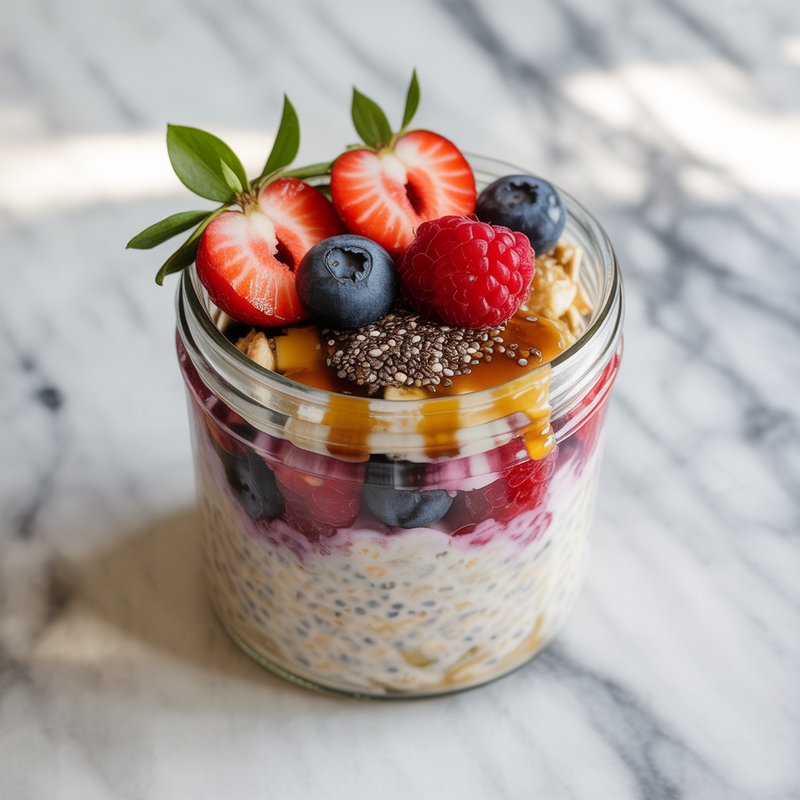
Lemon blueberry. Add 2 tsp lemon zest to the filling and fold in 120 g fresh blueberries coated in 1 tsp cornstarch. Frozen berries work if you thaw, drain, and pat dry, but they can bleed color. Expect a softer set near fruit pockets.
Espresso. Dissolve 2 tsp instant espresso in 1 tbsp hot water, cool, then blend into the filling. Espresso intensifies vanilla notes and sells the dessert as something fancier than the macros suggest.
Salted caramel look-alike. Heat 40 g allulose with 1 tbsp water in a small pan over medium heat until amber, then whisk in 60 g plain Greek yogurt off heat to make a tangy “caramel” sauce. A pinch of salt, a drop of vanilla, done. Drizzle on chilled slices. It’s not a true caramel, but it scratches the itch.
Pumpkin. Mix 200 g canned pumpkin puree with the blended filling, add 1 tsp cinnamon, 1/2 tsp ginger, 1/4 tsp nutmeg, and bump sweetener by 15 to 20 g. Increase cornstarch to 15 g to manage the extra moisture. Bake time can extend by 10 minutes.
A quick scenario: the Tuesday lifter with 40 grams of protein left
You finish an evening workout, check your tracker, and you’re short 40 grams of protein with 300 calories left. You also want something that feels like dessert, not a shake. Keep a pre-baked cheesecake in the fridge, slice two pieces, and top with a few raspberries. If you used nonfat dairy and the crust above, you land in the neighborhood of 36 to 44 grams protein and 340 to 400 calories for two slices, depending on brand choices. If that’s a hair over target, trim the slices by a centimeter each. The point is flexibility without resorting to a chicken breast at 9 p.m.
Where people get burned: the five common mistakes
- Overbaking. The center should jiggle. If it looks fully set in the oven, it will be stiff when chilled. Skipping the blend. If you don’t fully homogenize the cottage cheese, you’ll get curds, not cream. A food processor can work, but you need patience. Too much protein powder in the filling. It reads chalky and tight, and it won’t improve overnight. Hot-room chilling. If your kitchen is warm and you skip the oven cool-down, steam gets trapped and water pools under the crust. Cutting early. The flavor blooms and the structure finishes setting in the fridge. Two hours is not enough. Think overnight, minimum six hours.
Crust questions you’ll actually have
Do I need a crust at all? No, you can go crustless and save calories. Spray the parchment well and expect the first slice to be a little stubborn. Texture-wise, a thin crust adds contrast you miss when you remove every gram of fat. If you’re the person who scrapes cheesecake off the crust anyway, skip it.
Can I use oats or almond flour? Yes. For oats, blitz rolled oats into a fine meal and combine with protein powder and melted light butter, same hydration. For almond flour, reduce added fat because almonds carry their own. Expect macros to shift toward fat, which might be exactly what you want if you need more satiety.
What about a chocolate cookie base? Use high-cocoa, low-sugar wafers or a sugar-free cookie, and watch sodium. Cocoa powder alone won’t bind like crumbs do; you’ll need more fat or a touch of syrup.
Equipment that helps, and what you can live without
A high-speed blender earns its spot here. Smooth filling equals good texture, and nothing else pulls curds together as cleanly. A food processor can do the job if you run it long enough, scraping the bowl multiple times.
A springform pan is non-negotiable if you care about clean edges. I’ve baked this in a deep pie dish in a pinch, and while it works, you’ll dig out slices instead of lifting them.
A water bath is optional. It evens out heat, which decreases cracking, but foil wraps and boiling water are not fun on a weeknight. If you keep the oven at 300 F or slightly lower and respect the cool-down, you can skip the bath and still get a smooth top.
Timing, storage, and making it work in a real week
The bake is hands-off after the initial setup. Plan 15 minutes to prep, 50 to 65 minutes to bake, 2 hours to cool down between oven and counter, then an overnight chill. That sounds like a lot because custards are patience games. The active work is short, and the yield is a dessert that feeds you for days.
Store covered in the fridge for up to 5 days. The flavor actually improves on day two. For longer storage, slice, wrap individually, and freeze up to a month. Thaw slices in the fridge for 6 hours or at room temp for 30 to 45 minutes. Frozen and thawed, the texture stays surprisingly intact if you used cornstarch.
If you meal prep aggressively, bake two at once on the same rack, swapping positions halfway. The oven time stays close, maybe add 5 minutes. Don’t crowd the pans; airflow matters.
Substitutions, constrained by reality
Dairy-free version. Cottage cheese alternatives exist, but most are starch and coconut oil, not protein. You’ll hit texture, not macros. If dairy is off the table and you still want protein, blend silken tofu with a pea-cashew cream and use a pea-casein mimic protein powder. It can be good, but it’s a different dessert.
Sugar choices. Allulose is friendlier here because it browns and doesn’t recrystallize. If you only have erythritol or a granulated blend, blend longer to dissolve and plan on a slightly crisper crust and cooler sweetness. Liquid stevia alone tends to taste thin and bitter at the amounts needed; use it as an accent, not the main sweetener.
Flavor extracts. Vanilla is doing heavy lifting. Cheap vanilla often tastes thin and chemical, which becomes obvious in a low-fat dessert. If budget allows, use a decent pure vanilla. Almond extract is potent; a quarter teaspoon can make it taste like a bakery, but it can also dominate. Add slowly.
Binders and thickeners. You can swap cornstarch for arrowroot 1:1, or use 1 tsp powdered gelatin bloomed in 2 tbsp cold water, melted, and blended in warm. Gelatin gives a bouncy custard vibe and holds up well in the fridge, but some people detect it in texture. Cornstarch is simpler and predictable.
Why this version works when others don’t
Most protein cheesecakes fail in three places. They overshoot the set and go rubbery, they use too much powder and get chalky, or they cheap out on sugar to the point where the sweetener taste screams. This approach uses dairy protein as the backbone, starch as insurance, and enough real sugar to improve flavor without spiking calories. We keep the bake gentle and the cool-down controlled. It’s not magic, just a stack of small decisions made for a custard, not a cake.
One more nuance: acidity. Lemon juice in small amounts brightens flavor and helps proteins set in a supple way. You won’t taste “lemon cheesecake” unless you push it. Skip the lemon and you’ll still get a set, but the flavor reads flat.
Troubleshooting quick reference
Crack across the top. The oven was a touch too hot or the cool-down was rushed. Next time, lower the temp by 10 F and do the oven-door crack cool for a full 45 minutes. Cracks don’t affect flavor, but they do announce dryness.
Weeping or water pooling. Too much free water stayed in the mix. This can come from thin yogurt, not blending enough, or using frozen fruit without drying it. Blend longer, drain watery dairy, and pat fruit dry.
Grainy mouthfeel. Usually overbaked or too much erythritol. Shift to more allulose, shorten bake by 5 to 8 minutes, and be strict about the jiggle test.
Doesn’t set. Oven temperature underperformed or you underbaked. Use an oven thermometer, extend the bake by 10 minutes next time, and don’t skip cornstarch. If it is already baked and soft, chill it an extra day; it will firm some.
Tastes “diet.” Add 10 to 15 g real sugar and 1 tsp vanilla. If macros allow, switch to 2 percent cottage cheese. Small changes, big perception shift.
If you want to push protein higher, here’s the responsible way
Add 15 g micellar casein to the filling and 100 g Greek yogurt on top of the base amount, then increase lemon juice by 1 tsp and cornstarch by 2 g. Blend gently after adding casein to avoid gumminess. Bake at 295 F and check at 55 minutes. Expect about 3 to 4 grams more protein per slice and a slightly denser texture that stays pleasant. Past this, the returns diminish fast.
Serving ideas that keep the numbers friendly
Fresh berries need no explanation and add visual pop without many calories. A tablespoon of warmed sugar-free jam thinned with water makes a quick glaze. For chocolate people, whisk 1 tsp cocoa powder with 1 tsp hot water and 1 tbsp Greek yogurt, sweeten to taste, and dollop. If you’re eating it post-workout, a drizzle of warmed powdered peanut butter mixed with water hits sweet, salty, and protein.
If you’re feeding someone who doesn’t care about macros, give them a slice with a spoon of lightly sweetened whipped cream. They won’t know it’s a protein dessert until you tell them, and maybe don’t.
A note on planning and mindset
Macro-friendly baking rewards process more than improvisation. You can riff on flavors, but respect the structure. Measure by weight when you can. Track oven behavior, because home ovens lie. If your first version is merely good, not great, that’s normal. Your dairy brand, your pan, even your city’s water can shift texture a hair. Keep the core moves the same: blend smooth, bake gentle, cool slow.
You’re not trying to reverse-engineer a New York cheesecake to be low calorie. You’re building a protein custard that https://telegra.ph/Cottage-Cheese-Banana-Protein-Pancakes-for-Post-Workout-Fuel-02-07 behaves like cheesecake under a knife and in your mouth. When you frame it that way, you stop chasing impossible comparisons and start enjoying a dessert that fits your life.
Recap, if you want a tight plan for your next grocery run
You need cottage cheese, Greek yogurt, eggs, sweetener plus a touch of real sugar, vanilla, cornstarch, lemon, and salt. For crust, grab graham crumbs, whey isolate, and light butter or coconut oil. If you like a swirl or a topping, pick a berry or a chocolate option. Allocate an evening where it can cool undisturbed. Give it one overnight in the fridge and you’ll have a week of slices that hit the protein target without tasting like a compromise.
Once you’ve made it twice, you’ll find your house version. Maybe you settle on 2 percent cottage cheese, maybe you swear by the water bath, maybe you insist on a coffee extract. That’s the fun: keeping the macro math honest while you build something you actually crave.